

Resources and books for ministers, worship leaders, church members and all spiritual people
Philip Garside Publishing Ltd
Faith and Hope in Midlife - Print.
Faith and Hope in Midlife - Print.
Couldn't load pickup availability
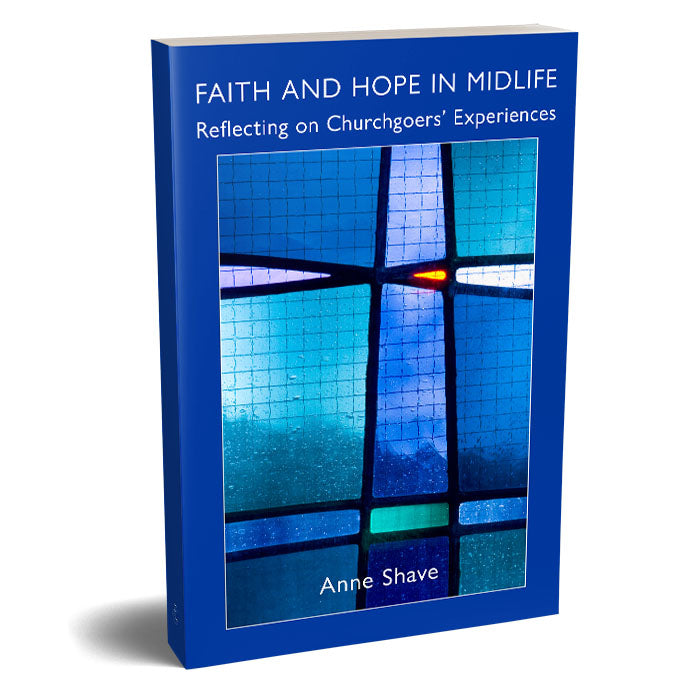
Faith and Hope in Midlife:
Reflecting on Churchgoers’ Experiences
by Anne Shave
[13 in stock 25 Apr 2026]
Customers outside New Zealand
Please order your print books through your local Amazon store to avoid the high cost of postage from New Zealand:
Amazon.com | Amazon UK | Amazon Aust.
A thoughtful, story-rich exploration of how Christian faith deepens, shifts, struggles, and grows through the complex middle years of life.
This book will help readers to:
- understand why midlife can be a spiritually significant stage of life
- recognise that questioning, reappraisal, and change are not signs of failure
- hear honest stories from New Zealand churchgoers, clergy, and spiritual directors
- reflect on their own experience of faith, church, work, family, grief, and change
- explore spiritual practices that sustain and deepen faith in midlife
- identify ways churches can better support people in the middle decades of life
- open up meaningful conversations about discipleship, belonging, and spiritual growth
Features:
- Based on New Zealand research into the experiences of Christians in midlife
- Includes real-life stories from Anglican, Catholic, and Presbyterian churchgoers
- Explores faith development, church belonging, pastoral care, spiritual direction, retreats, and mentoring
- Includes reflection or discussion questions and recommended resources at the end of each chapter
- Offers two practical case studies: The Moses Project and Ignatian Retreats in Daily Life
Soft cover, 246pp
6" x 9" (0.4kg)
ISBN 978199102710
Philip Garside Publishing Ltd (2022)
Click for eBooks

Click here for a 5 minute audio podcast introduction to the book
Description
Midlife is often treated as a punchline, a crisis, or simply a busy stretch of adult life to be endured. Yet for many Christians it is something far deeper: a season of searching, reappraisal, loss, discovery, and renewed spiritual possibility. This book listens carefully to that season.
It doesn’t flatten midlife into easy slogans or tidy answers. Instead, it honours its complexity. Some people feel more settled than ever. Others feel restless, displaced, weary, or surprised by questions they thought they had long ago resolved. Many carry major responsibilities for children, parents, work, church, and community, while quietly wondering what God is doing in them now.
Drawing on the experiences of New Zealand churchgoers, ministers, priests, and spiritual directors, this book explores the connections between midlife, Christian faith, and the life of the church. The voices gathered here come from Anglican, Catholic, and Presbyterian settings, and from congregations that differ widely in theology, worship style, size, and culture. That variety matters. Midlife is not one thing. Church is not one thing. Faith is not one thing. Yet across the stories there are recognisable patterns:
- the need to make sense of the past
- the desire for deeper prayer
- the ache of grief, the challenge of family change
- the fatigue of over-service,
- the hunger for meaning, and
- the quiet hope that faith may still open into something more spacious.
At the heart of the book is a simple but powerful insight: people in midlife are often relied upon by churches, but not always deeply noticed by them. They are the committee members, musicians, pastoral carers, preachers, parents, administrators, welcomers, fundraisers, and practical workers who keep congregational life moving. Because they are often competent and useful, their own spiritual needs can be overlooked. They may be seen as givers, not seekers. They may be assumed to be stable, even when their inner life is shifting. They may be invited to serve but rarely invited to reflect. This book asks what might happen if churches listened more carefully to those in the middle years.
The opening chapter explores the meaning of midlife itself. Rather than assuming a fixed age range, the book recognises that midlife is shaped by circumstance, culture, health, family, work, and self-understanding. It may arrive through a birthday, a bereavement, a child leaving home, a career question, an illness, a relationship change, or a dawning awareness that life is not infinite. The book handles the idea of “midlife crisis” with care. Some people do experience disorientation and upheaval. Others experience freedom, confidence, gratitude, and deeper self-acceptance. The point is not to force one storyline onto everyone, but to give readers language for what may be stirring beneath the surface.
A major strength of the book is its use of story. The personal accounts don’t feel like decorative examples added to a theory. They are the substance of the book. Through them, readers meet people who are rethinking work, adjusting to changing family roles, dealing with bereavement, negotiating their place in church, exploring new forms of prayer, or wondering why familiar worship no longer nourishes them as it once did. These stories help readers say, “It’s not just me.” That recognition alone can be deeply pastoral. It lowers anxiety. It makes space for honesty. It gives permission to name experiences that many churchgoers carry in silence.
The book also explores faith development. It considers images such as journey, spiral, labyrinth, seasons, and organic growth, showing that Christian faith does not simply progress in a straight line. Mature faith may include uncertainty. Growth may involve letting go as well as learning more. A person may become less dogmatic but more deeply rooted, less certain about the edges but more committed to the centre. For ministers, spiritual directors, and lay leaders, this is an important corrective. Adults in midlife may not need another beginner-level programme or another task to perform. They may need companionship, challenge, silence, mentoring, retreat, or space to ask better questions.
Church belonging is treated with nuance. The book recognises the deep value of Christian community: friendship, small groups, worship, music, service, and shared memory all matter. Church can be holy ground, a place where people feel known, held, and connected to something larger than themselves. At the same time, church can also be frustrating, exhausting, or painful. Some people in midlife find themselves pulled between loyalty and weariness. They may love their congregation but feel spiritually underfed. They may long for depth but be surrounded by busyness. They may want to serve but not be consumed. This honesty makes the book especially useful for church leaders who want to move beyond assumptions.
Family responsibilities receive careful attention. Midlife may include parenting teenagers or young adults, adjusting to an empty nest, caring for ageing parents, supporting partners through change, grieving deaths, or managing the cumulative strain of multiple demands. Work is also explored, not merely as employment but as vocation, burden, identity, and service. The book understands that questions about work can become spiritual questions:
- What has my life meant?
- What have I given myself to?
- Is there still time to change?
- What is God asking of me now?
These questions are not signs of selfishness. They are often signs that a person is beginning to listen more deeply.
The later chapters focus on the desire for “something more.” That phrase captures one of the book’s strongest themes. Many Christians in midlife are not abandoning faith; they are seeking a deeper, more honest, more sustaining form of it. They may be drawn to simple prayer, silence, retreats, spiritual direction, long-established patterns of devotion, or forms of challenge that connect faith with action. The book doesn’t prescribe one spiritual path. It offers possibilities. It invites readers and congregations to discern what fits their own context.
The chapter on the “discipleship gap” is particularly valuable. It names a problem many churches barely acknowledge: adults who have been Christians for decades may still need intentional support in growing as disciples. They may need mentors, spiritual companions, mature teaching, and opportunities for reflection that go beyond maintenance. The book challenges churches to stop assuming midlife believers will simply “get on with it.” That assumption wastes wisdom and risks losing people who are hungry for more.
The two case studies offer practical imagination. The Moses Project and Ignatian Retreats in Daily Life show how churches can create structured spaces for spiritual reflection, prayer, service, and discernment. Their value is not that every congregation should copy them exactly. Their value is that they demonstrate what becomes possible when churches take adult spiritual growth seriously.
This is a book for Christians in midlife, and it is also for ministers, priests, lay leaders, pastoral carers, spiritual directors, and congregations. It will help older readers understand what their adult children may be facing. It will help younger readers prepare for questions that may come later. Most of all, it will help churches notice a group that is often present, often active, often burdened, and often spiritually ready for deeper conversation. Honest, gentle, researched, and deeply humane, this book offers a wise invitation: to see midlife not as decline or crisis alone, but as a threshold where faith may become more truthful, more grounded, and more alive.
About the Author
Anne Shave graduated with a doctorate in Theology from the University of Otago in 2018. Her research explored the experiences of Christians in midlife within Catholic, Anglican, and Presbyterian congregations in New Zealand. In 2019 she was a scholar in residence at Vaughan Park Anglican Retreat Centre in Auckland and completed a short course in retreat direction and spiritual guidance at St Beuno’s Jesuit Spirituality Centre in Wales. Formerly a secondary-school English teacher, she is now employed part-time within the Presbyterian Church of Aotearoa New Zealand and works as a tutor at Hōhepa Canterbury.
Praise for Faith and Hope in Midlife
“Midlife is a period of change and growth; the essence of this book is to help individuals and church communities recognise the spiritual needs of those in this age bracket. Pastoral carers, clergy, spiritual directors and midlifers themselves are likely to find the author's research and thoughtful enquiry a treasure trove for addressing spiritual developments specific to this stage of life.
Faith and Hope in Midlife evolved from Shave's doctorate in theology, completed in 2018 through Otago University. Much of the book is peppered with, and informed by, comments and stories from her interviewees: long-term Christians from Presbyterian, Anglican, and Catholic churches. Although Methodists weren't represented, Shave drew respondents from a diverse range of church and personal backgrounds.
Long-term church-goers - and, by default, church communities – are "not always well prepared to anticipate or negotiate such [midlife] changes," writes Shave, reiterating the thoughts of some of her interviewees.
Shave's background in adult education and high school teaching shines through in the book's approach, content, and layout She provides sufficient context and theoretical tools to make sense of the juicier explorations of midlifers' experiences. Readers unfamiliar with - or wanting a refresher of - spiritual development concepts, for example, are likely to find the discussion in chapter 2 helpful and accessible. Bolded subheadings and occasional tables of bullet points help navigate the reader and act as quick-reference guides.
Shave says her intention is "to raise more questions than I have attempted to answer." To that end, each of the book's eight chapters include reflective questions for individuals or discussion groups to ponder, plus a short list of recommended resources. The appendix details more of Shave's doctoral research.
Readers will gain insight into what midlife churchgoers value about their Christian faith, how it is evolving in their second half of life, and what they see as benefits and challenges of church involvement Shave talks of spiritual lives remaining 'generative' rather than stagnating or drifting. The ministry of spiritual direction for this age group features positively.”
Reviewer Megan Blakie is a Spiritual Director and writer
faithmattersnz@gmail.com
• • •
“Anne Shave lets us hear the voices of several dozen churchgoers at midlife as they discuss their hopes, fears, personal experiences, and God’s presence in the challenges and opportunities. She gives a clear presentation of patterns of discipleship and spiritual growth at midlife, and the longing of her interviewees for more – more depth of faith, more help with discipleship, more resources for the challenges, and more guidance for their inner journey. … Her book is a blessing for anyone at midlife. She provides reassurance of the significance and blessings of this underappreciated life stage. Shave also connects the themes of midlife – explored through interviews and a helpful overview of research – with faith communities, enabling more effective ministry with and to people in this life stage.”
Rev Dr Lynne Baab, author of A Renewed Spirituality: Finding Fresh Paths at Midlife and Embracing Midlife: Congregations as Support Systems
• • •
“I highly recommend this book. Anne Shave brings experiences of midlife Aotearoa New Zealand churchgoers into creative, accessible dialogue with her extensive research on this phase of life which is rarely addressed in churches. True to her claim that her intention is to raise more questions than answers, Anne sits with the questions as stories, images and experiences trigger insights that offer new ways forward. … This book is a taonga (treasure) raising consciousness about the desire for the more that is at the heart of the midlife journey. … It is essential reading for those in midlife, for clergy and all concerned with communities of faith.”
Kathleen P. Rushton. Independent Biblical Interpreter and Spiritual Director. Teaching Fellow Trinity Methodist College
• • •
“How can the church attend to the needs of people in midlife? This is such a vital question both in terms of how we care for people but also how the church maintains meaningful connection with this group in an age when many people are disconnecting. Anne Shave’s work is based on significant research and well-chosen interviews and provides an invaluable insight into the spiritual journeys and needs of this age group. Anne not only records her findings, but she also draws helpful conclusions. This is a good read, challenging and inspirational for church life.”
Rt Rev Hamish Galloway, Moderator of the Presbyterian Church of Aotearoa NZ
• • •
Contents:
- Introduction
1 — Counting our days
- Defining midlife
- Midlife crisis?
- Contrasts
- Tasks of midlife
- Review and reappraisal
- Fresh perspective
- Where to from here?
- Questions for reflection or discussion
- Recommended resources
2 — Faith development and midlife
- Rosemary’s story
- Jane’s story
- Images of spiritual development
- A journey
- A slinky, spiral or labyrinth
- Seasons
- Organic models of growth and fruitfulness
- Holy mixed metaphors
- Faith Development Theory
- Tony’s story
- Faith transitions
- Developmental expectation
- Questions for reflection or discussion
- Recommended resources
3 — Part of the Family
- Community
- Small groups
- Friendships
- Children and families
- Opportunities for service and for reflection
- Service
- Reflection
- Silence
- Experiences of worship
- Music
- Sermons and homilies
- Holy ground
- Questions for reflection or discussion
- Recommended resources
4 — Challenges
- Family responsibilities
- Care for children
- The “empty nest”
- Care for parents
- Bereavement
- Work
- Pastoral care
- Others issues and possible responses
- Questions for reflection or discussion
- Recommended resources
5 — Something more
- Desire for better understanding
- Desire for deepening relationship with God
- Simple prayer
- Retreats
- Long-established patterns of prayer
- Desire for challenge
- Questions for reflection or discussion
- Recommended resources
6 — Addressing the Discipleship Gap
- Communal and individual responsibility
- Ian’s story – Part One
- Ian’s story – Part Two
- Mentoring within congregations
- Spiritual Direction
- Experiences of spiritual direction at midlife
- Questions for reflection or discussion
- Recommended resources
7 — Two case studies
- The Moses Project
- Ignatian Retreats in Daily Life
- Points of commonality
- Further thoughts to ponder
- Questions for reflection or discussion
- Recommended resources
8 — Observations and next steps
- Churchgoers in midlife
- Clergy
- Spiritual directors
- Denominations
- Next steps
Appendix — The research process
- The original interviewees
- Churchgoers in midlife
- Clergy
- Spiritual directors
- Selection of interviewees
- Location
- Limitations of the sample
- Cohort effects
Bibliography
Endnotes