
Resources and books for ministers, worship leaders, church members and all spiritual people
Philip Garside Publishing Ltd
The League of Lilith - eBooks.
The League of Lilith - eBooks.
Couldn't load pickup availability
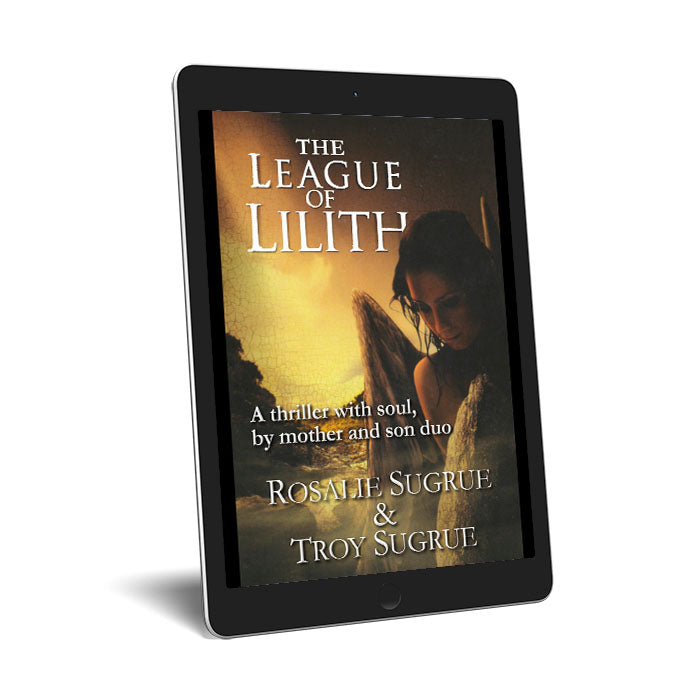
The League of Lilith
A thriller with soul
By mother and son duo Rosalie Sugrue & Troy Sugrue
This provocative literary thriller weaves feminism, theology, sexuality, and power into a gripping contemporary mystery.
Read this book to:
- Question long-held assumptions about religion, gender, and authority
- Explore feminist reinterpretations of biblical narratives
- Engage with complex female characters navigating power and identity
- Reflect on the intersections of sexuality, spirituality, and control
- Experience a thriller that balances intellectual depth with narrative drive
- Discover alternative spiritual traditions and mythologies
- See modern society through a sharper, more critical lens
Features
- A bold fusion of literary fiction and thriller elements
- Rich feminist theological commentary embedded in narrative
- Multiple interwoven perspectives and timelines
- Contemporary New Zealand setting with global resonance
- Written by a distinctive mother-and-son author duo
You are buying a zipped file containing eBook editions of this 420 page 2013 book in ePub and Mobi formats.
ISBNs:
ePub 9781927260203
Mobi 9781927260210
Philip Garside Publishing Ltd (2013)
Description
What happens when ancient stories, long controlled by patriarchal voices, are reclaimed – and weaponised – in the modern world?
This novel opens with a sense of quiet dislocation: comfortable lives that are spiritually hollow, relationships shaped by expectation rather than desire, and women constrained by roles they did not choose. From this unease emerges a daring exploration of belief, rebellion, and awakening.
Set primarily in contemporary Christchurch, the narrative follows several women whose lives intersect through academia, sexuality, and spirituality.
A bored but privileged wife seeks meaning beyond domestic perfection.
A young sex worker, sharp-witted and self-possessed, stumbles into religious studies and finds her assumptions challenged.
An aging but formidable lecturer re-examines sacred texts through a radical feminist lens, exposing the silences and distortions that have shaped Western theology for centuries.
Around them swirl lovers, clients, scholars, and zealots – each revealing how power is asserted, resisted, and transformed.
As biblical women long relegated to the margins are reimagined with agency and voice, ancient myth collides with modern desire. Pagan ritual, Christian doctrine, and secular ambition clash in ways that are at once unsettling and illuminating.
The story refuses easy answers, instead inviting readers to wrestle with uncomfortable questions about morality, gender, and the stories societies choose to sanctify.
Intellectually fearless and emotionally charged, this is a novel for readers who enjoy fiction that challenges as much as it entertains.
It is both a suspenseful narrative and a philosophical inquiry, offering a reading experience that lingers long after the final page.
• • •
Review by Rev John Meredith
December 2020
Rosalie Sugrue is a very experienced writer and, for this book, is joined by her son, Troy.
There are two inter-related groups of characters in the story. One is a group studying a tertiary level paper on ‘Biblical Text and Women.’ Readers are invited to share with the students as they are exposed to the voices of biblical women that have been submerged within the text. These are voices that have been silenced by being interpreted by those who have sought to maintain biblical support for the dominance of men in church and society; but as Professor of Divinity Ann Loades has said, only feminist interpretation (of the Bible) can begin to restore the dignity of women.
The other group is a group of Wiccan witches who affirm female identity as an essential aspect of wholesome life. It is unfortunate that ‘witches’ have come to be identified as figures of malign intent as, for example, in many children’s stories and in Macbeth. Witches have always evoked suspicion because they have questioned tradition. Wiccan witches should be seen, however, as devotees of a non-theistic religion emphasising the importance of living in harmony with nature. In this sense they embrace environmental principles for a healthy world and universal goodwill.
Lilith is a mythological figure affirming the universal oneness of creation where there are no boundaries of gender, ignorance, suspicion, desire to control others or to shape the world according to a selfish human plan. Ultimately there can be no hard lines separating the league of Lilith from the biblical concept of divine creativity. As one reads this book subtle theological insights keep emerging.
On the back cover Margaret Mayman has written: This is an intriguing story of a non-dominant culture that dips into the myth of Lilith and provides readers with another lens on patriarchal religion. … Powerful friendships among the women transcend the barriers of class and race. The novel draws on current feminist biblical interpretation that is theologically sound without being didactic. An enthralling yarn which would be ideal for book group discussion.
It may also challenge readers to reappraise long-held views and, without undue effort, to think more open-mindedly.
• • •
Reader response video
Praise for the print edition:
“This is a page-turning book, an intriguing story of a nondominant culture that dips into the myth of Lilith and provides readers with another lens on patriarchal religion. Likable and unlikable, the characters are engaging. Powerful friendships among the women transcend barriers of class and race. The novel draws on current feminist Biblical interpretation in a way that is theologically sound without being didactic. An enthralling yarn, which would be ideal for book group discussion.”
Rev Dr Margaret Mayman, St Andrew’s on The Terrace, Wellington
“…a book that really captures my interest and engages my head and my heart… Do you recognise Lilith of the title? In Jewish mythology she was Adam’s first wife, having been created at the same time and from the same earth as Adam but who left Eden because she refused to become subservient to him. Alternatively, Lilith was regarded as a demon. Many of the writers who contributed to the development of modern-day Wicca express special reverence for Lilith, regarding her as the embodiment of the Goddess and protector of women but who subsequently became demonised due to the rise of patriarchy.
The League of Lilith interweaves themes of women, sexuality, pregnancy and childbirth with chauvinism, and contrasts contemporary attitudes to women with those of the Bible. The story concerns the lives of women from very different backgrounds and their male partners, whose paths intersect in a suspenseful chronicle of relationships. It explores ‘a world obsessed with power and control and the abandonment of the ancient, sacred duty of women.’ The multi-layered, interwoven story is beautifully structured and maintains a cracking pace, with different strands of contemporaneous action intriguingly counter-pointed, while passages of reminiscence inform the motivations of the characters.
The contrasting of Christian, Biblical and Wiccan stories, liturgies and values draws on academic, Biblical and feminist research but the authors neither preach nor denigrate any particular faith message. They also indulge in an occasional bit of fantasy. This is, after all, a novel and not a lecture. As they state, ‘…the scholarship is sound and we hope it gives people food for thought and leads some to realise there are enlightened ways of looking at Scripture, and of course, that caring relationships are the best of human values.’
The League of Lilith is a ripping good yarn but, at the same time, it can stand up proudly among the best of international fiction of relationships, religion and suspense. This is a book to enjoy reading yourself, and which would also make an ideal Christmas gift for someone who enjoys a good story along with concepts to ponder.”
Shirley Dixon, published in Touchstone, November 2011.
About the Authors
Rosalie Sugrue brings a background in theology, feminist thought, and literary fiction, crafting narratives that interrogate belief systems and cultural power structures. Her writing is known for intellectual rigor combined with emotional insight.
Troy Sugrue contributes a contemporary edge and narrative momentum, complementing the novel’s philosophical depth with sharp dialogue and modern sensibility. Together, they form a rare and compelling collaborative voice.
Contents
- Map of Pauline’s Property
- Famine in the Land
- Eve
- Word of God
- Sky Clad Sabbat
- Rahab
- Ruth
- Sarah Becomes Sarai
- Mabon Sabbat
- The Nameless Daughter
- The Wife of Manoah
- The Levite’s Concubine
- Diana and Tamar
- Wilkin’s Rage
- Samhain
- What’s Up, Kat?
- Vashti and Esther
- Psalms and Proverbs
- Song of Songs
- Miriam and Huldah
- Gomer
- Yule Sabbat
- Genealogy
- Martha
- An Issue of Blood
- Acts
- Akaroa
- Litha Sabbat
- Journeys
- Revelation, Sarai’s
- Revelation, Pauline’s
- Visions
- Demons
- Angels
- Lilith
- A Note on the Text
- About This Book and the Authors